
Introduction
Search is no longer just about ranking pages. It is about being understood, trusted, and surfaced across both traditional search engines and AI driven systems.
For businesses, creators, and professionals operating in Michigan, this shift introduces both opportunity and complexity. Visibility is now influenced by how well content aligns with search intent, geographic relevance, structured information, and machine interpretation.
This is where SEO and GEO Best Practices in Michigan and Michigan AI Optimization and Digital Marketing intersect.
This guide explores how these strategies work together to improve discoverability, strengthen authority, and position websites for long term growth in modern search environments.
What SEO and GEO Best Practices in Michigan Actually Mean
Understanding SEO in a Modern Context
Search Engine Optimization focuses on improving how content appears in traditional search engines such as Google.
Modern SEO is no longer limited to keyword placement. It now includes:
• search intent alignment
• content structure
• technical performance
• authority signals
• user experience
Google’s own documentation emphasizes helpful, reliable, and people first content as the foundation of ranking success.
Reference:
https://developers.google.com/search/docs/fundamentals/creating-helpful-content
Understanding GEO or Generative Engine Optimization
Generative Engine Optimization focuses on how content is interpreted and used by AI systems.
These systems include:
• AI powered search assistants
• generative answer engines
• conversational search platforms
Unlike traditional SEO, GEO prioritizes:
• clarity of meaning
• contextual relevance
• structured formatting
• credible information
Content optimized for GEO is more likely to be referenced, summarized, and recommended by AI systems.
Why Michigan Requires a Unique Approach
Michigan presents a distinct digital environment shaped by:
• strong academic institutions
• regional industries such as automotive and manufacturing
• local search behavior
• community driven engagement
Because of this, SEO and GEO Best Practices in Michigan must incorporate:
• geographic signals
• institutional credibility
• local context
• regional authority
These elements strengthen both traditional rankings and AI interpretation.
How Michigan AI Optimization and Digital Marketing Expands SEO
Moving Beyond Keywords
Artificial intelligence has changed how content is evaluated.
Search systems now analyze:
• meaning instead of just keywords
• relationships between ideas
• overall site authority
• content clarity
Michigan AI Optimization and Digital Marketing focuses on improving how content is:
• structured
• interpreted
• connected across a website
This allows content to perform well not only in search rankings but also in AI generated results.
The Relationship Between SEO, GEO, and AI Optimization
| Strategy | Primary Focus | Outcome |
|---|---|---|
| SEO | Ranking in search engines | Increased visibility |
| GEO | Interpretation by AI systems | Increased referencing |
| AI Optimization | Content clarity and structure | Increased understanding |
When combined, these strategies create a system where content is:
• discoverable
• understandable
• trustworthy
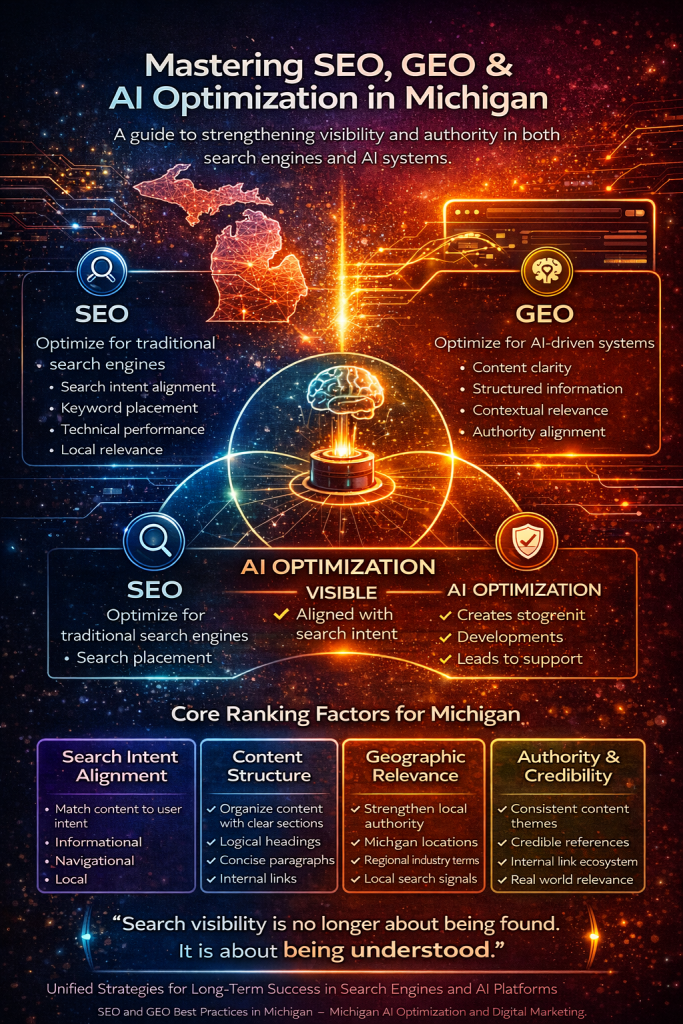
Core Ranking Factors for SEO and GEO Best Practices in Michigan
1. Search Intent Alignment
Search engines prioritize content that directly answers user intent.
Types of intent include:
• informational
• navigational
• transactional
• local
Michigan based content should also align with regional intent, such as location specific searches.
2. Content Structure and Readability
Well structured content improves both user experience and machine interpretation.
Best practices include:
• clear headings
• logical sections
• concise paragraphs
• consistent formatting
Example Structure
| Element | Purpose |
|---|---|
| H1 | Defines main topic |
| H2 | Breaks content into sections |
| H3 | Supports detailed explanations |
| Paragraphs | Provide clarity and depth |
3. Geographic Relevance
Location based signals improve visibility for Michigan audiences.
This includes:
• referencing Michigan locations
• aligning with local industries
• reflecting regional context
Google emphasizes local relevance in its ranking systems, especially for location based queries.
Reference:
https://developers.google.com/search/docs/appearance/local-search
4. Authority and Credibility
Search engines and AI systems prioritize trustworthy sources.
Authority signals include:
• consistent content within a topic
• credible references
• internal linking structure
• real world relevance
UX Best Practices That Improve SEO Performance
User experience directly impacts:
• bounce rate
• time on page
• engagement signals
All of these influence rankings.
Key UX Principles
1. Readability
Short paragraphs improve engagement.
Avoid long blocks of text.
2. Visual Support
Use images to reinforce ideas.
Each image should include descriptive alt text.
3. Logical Flow
Content should guide readers from one idea to the next.
4. Scannability
Readers should be able to skim and still understand key points.
Use:
• headings
• lists
• tables
Internal Linking Strategy for Authority
Internal linking connects your content into a structured network.
Example:
This page should link to:
• Michigan AI Optimization and Digital Marketing page
• relevant blog posts
• supporting resources
This helps search engines understand relationships between topics.
Practical Application Framework
Step by Step Approach
- Define your primary topic
- Create structured content around that topic
- Connect related pages through internal links
- Reinforce geographic relevance
- Maintain consistency across all content
Common Mistakes to Avoid
• writing for algorithms instead of users
• covering too many topics on one page
• ignoring local relevance
• lacking structure
• inconsistent messaging
Quote Section for Engagement
“Search visibility is no longer about being found. It is about being understood.”
This reflects the shift toward AI driven search systems.
Final Thought
SEO and GEO Best Practices in Michigan and Michigan AI Optimization and Digital Marketing are not separate strategies.
They are interconnected systems that shape how content is discovered, interpreted, and trusted.
Websites that focus on:
• clarity
• structure
• relevance
• consistency
will continue to perform well across both traditional search engines and modern AI platforms.
Leave a Reply