
Introduction
Digital marketing or digital advertising is NOT just about search ads!
When someone types something into google, ads will appear. But… not all advertising actually works this way. A large portion of digital advertising does not just wait for someone to search. Instead, it uses data to anticipate what a person might do next. Ads are placed in front of users based on behavior, patterns, and previous interactions.
THIS IS HOW MODERN ADVERTISING WORKS!
What Display Advertising Used to Look Like
Now, in the past, advertising had a more basic approach for the most part.
Advertisers would focus on things like:
- Relying on general assumptions about users
- Targeting broader audiences
- Choosing specific websites to place ads on
Due to this being the main focus, ads started to often be shown to people who had no real INTEREST in them. This led to low engagement and wasted money. Advertising for the most part back then would lack precision.
What Display Advertising Looks Like Now
Today, advertising can be presented as over saturated and have a lack of precision. But it is safe to say that it is more advanced. Instead of just manually choosing where ads appear, systems now use data to decide:
- Where is appears
- Who sees an ad
- When they see it
These core decisions are made almost INSTANTLY using real time data. As a result, advertisements are no longer just random for the most part. Ads are typically based on patterns and behavior.
How Ads Use Data to Make Decisions
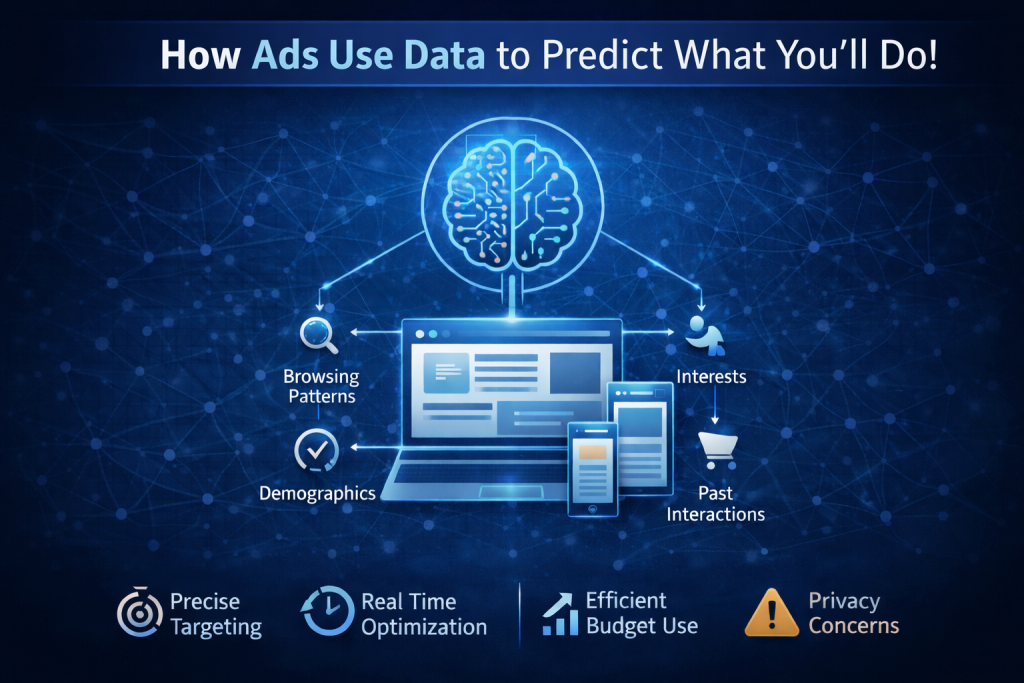
Now continuing on with modern advertising, platforms would analyze different types of user data to predict behavior. This includes search behavior, interests and engagement, demographic information, previous interactions with products or content, and search behavior.
When someone visits a website, systems quickly check for data to determine which ad is most relevant. This process happens in a matter of seconds.
Why Does User Behavior Matter?
Search ads rely on direct INTENT!
Let’s put ourselves in the user’s shoes. I am the user, and I type something in and the ad responds. Within display advertising, it works differently.
It focuses on patterns like what websites a user visits, what products they have viewed, and what websites a user visits. These signals help predict what a user might be interested in next. This is what allows ads to feel more personalized rather than just typing something in and the ad pops up.
What Are the Benefits of Data Driving Advertising?
Utilizing data to guide advertising decisions have MANY advantages.
Here are the top four benefits of data driving advertising to keep things simple:
- Better targeting for businesses
- More efficient use of marketing budgets
- More relevant ads for users
- Improved performance over time
Due to this, systems continuously learn from user behavior, campaigns can improve automatically.
Common Challenges and Concerns
To touch on one last thing before we wrap things up here, common challenges and concerns may be prevalent when using data to predict what a user will do.
Some of the common challenges and concerns that tend to come up are repeated ads leading to fatigue, lack of understanding from users about how ads are targeted, and most importantly, the concerns about data privacy.
These issues have led to change in regulations and how platforms collect and use data.
Final Thoughts
Overall, digital advertising has shifted from guessing to predicting.
Instead of just placing ads randomly… systems are now focused on using data to deliver more relevant messages to the right people. While the technology behind it may be complex, the idea is simple.
Show the RIGHT message to the RIGHT person at the RIGHT time.
Understanding this shift is essential to creating more effective digital marketing strategies.
Sources
Google Display Network: https://support.google.com/google-ads#topic=10286612
Think with Google: https://business.google.com/us/think/
eMarketer: https://www.emarketer.com/
Leave a Reply